When a Good Active Ingredient Is Not Enough
The development of innovative cosmetic active ingredients has accelerated rapidly, ranging from antioxidants and peptides to botanical compounds, vitamins, and bioactive molecules that modulate biological processes in the skin. However, having a potent active ingredient does not necessarily mean that it will perform effectively when incorporated into a topical formulation.
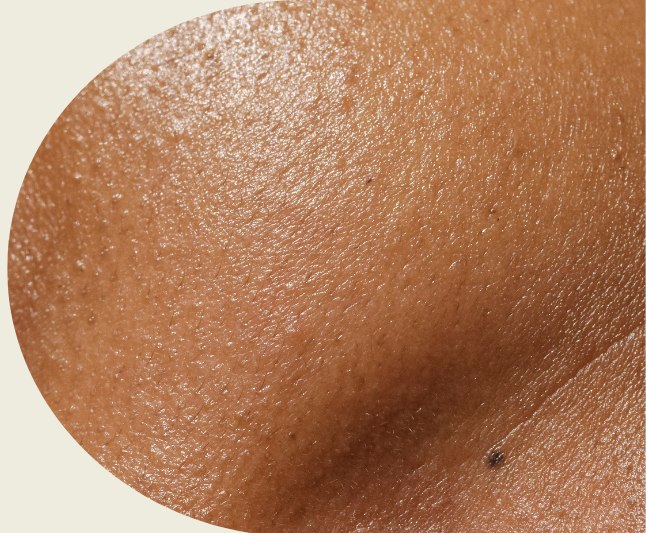
One of the major challenges lies in the skin itself. The skin is not simply a surface on which a cosmetic product is applied; it is a highly organized biological barrier that protects the body from external environmental exposure while simultaneously limiting the penetration of foreign substances. [1,2]
Therefore, the performance of a cosmetic active depends not only on its intrinsic biological activity, but also on several formulation and delivery-related factors:
- Can the active remain chemically stable within the formulation?
- Can it be released from the formulation?
- Can it partition into the skin?
- Can it be retained at the intended site?
- And most importantly, can it reach the site where its biological action is required?
These questions form the foundation of topical delivery science—the design of formulations and delivery systems to control how active ingredients interact with and are delivered to the skin. [1,3]
The Skin Barrier: Nature's First Defense
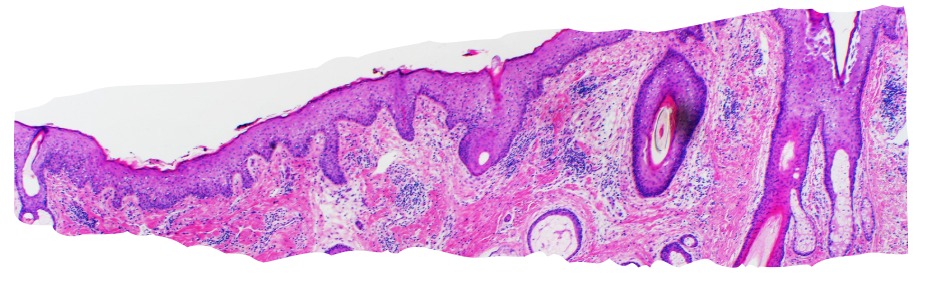
The skin consists primarily of the epidermis, dermis, and subcutaneous tissue. For topical delivery, however, the outermost layer of the epidermis—the stratum corneum (SC)—plays a particularly important role.
Often described using the “brick-and-mortar” model, the stratum corneum consists of corneocytes embedded within an intercellular lipid matrix. This highly organized structure is essential for maintaining barrier function and limiting the penetration of external substances. [2,4] Topical substances may interact with the skin through several pathways.
Transepidermal pathways
- Intercellular pathway — through the lipid domains between corneocytes
- Transcellular pathway — through the corneocytes and surrounding lipid domains
Transappendageal pathways
- Hair follicles
- Sweat glands
Hair follicles are particularly interesting for particulate delivery because they represent accessible appendageal structures that can act as local reservoirs for particles and active ingredients. [2,3]
Importantly, nanoparticle–skin interaction should not simply be interpreted as “smaller particles penetrate deeper.” Evidence indicates that many particulate systems do not freely cross intact stratum corneum into viable skin, but may instead accumulate at follicular openings or enhance localized skin deposition. [2,3]
This leads to an important principle:
Effective topical delivery is not simply about making an active penetrate deeper. It is about delivering the right active to the right site, at the right concentration, for the right duration.
Topical Delivery Is Not the Same as Transdermal Delivery
The terms topical and transdermal delivery are sometimes used interchangeably, but they describe different delivery objectives.
Topical delivery primarily aims to produce a localized effect within the skin or on its surface, including the epidermis, dermis, or skin appendages.
Transdermal delivery, in contrast, aims to transport an active across the skin and into systemic circulation.
For cosmetic applications, the objective is therefore generally not to maximize systemic absorption. Instead, the focus is often on localized skin delivery, skin deposition, and retention at the intended site.
Thus, the question in modern topical delivery is shifting from:
“How can we make the active penetrate the skin?”
to:
“How can we control where the active goes and how long it remains there?”
From Conventional Formulation to Advanced Delivery Systems
Conventional topical formulations—including creams, lotions, gels, emulsions, and serums—provide the basic environment in which active ingredients are dispersed and delivered to the skin. However, active ingredients differ substantially in their physicochemical properties.
Some are highly water-soluble but poorly compatible with the lipid-rich skin barrier. Others are highly lipophilic and may suffer from poor aqueous solubility, crystallization, or limited release from the formulation. Certain natural compounds, polyphenols, vitamins, and retinoids may also be sensitive to oxidation, hydrolysis, or light.
This has driven the development of advanced delivery systems designed not merely to carry an active ingredient, but to modify its physicochemical and biological behavior.
A well-designed delivery system can potentially:
- Protect sensitive active ingredients
- Improve solubilization and dispersion
- Encapsulate active compounds
- Control release
- Increase skin retention
- Enhance skin deposition
- Enable localized delivery
These functions have made advanced delivery systems increasingly important in modern cosmetic science. [1,5]
Nanocarriers: Engineering Delivery at the Nanoscale
Among advanced delivery technologies, nanocarrier-based systems have received considerable attention.
However, “nano” should not be interpreted simply as making a particle smaller. The true value of nanocarrier technology lies in the ability to engineer the composition, structure, surface properties, cargo loading, release behavior, and interaction between the carrier and the skin.
Modern reviews describe nanocarriers as multifunctional systems capable of protecting sensitive cosmetic ingredients, improving skin delivery, controlling release, and facilitating localized or targeted delivery. [3,5,6]
For cosmetic applications, nanocarriers can broadly be categorized into several groups.
1. Vesicular Nanocarriers
Examples include:
- Liposomes
- Niosomes
- Ethosomes
- Transfersomes
- Transethosomes
These systems can accommodate hydrophilic and lipophilic compounds and allow membrane composition to be engineered to modify interactions with the skin.
2. Lipid-Based Nanocarriers
Examples include:
- Solid Lipid Nanoparticles (SLN)
- Nanostructured Lipid Carriers (NLC)
These systems are particularly attractive for cosmetic applications because of their potential to improve stability, enhance occlusion and skin hydration, and provide controlled release.
3. Emulsion-Based Nanocarriers
Examples include:
- Nanoemulsions
- Microemulsions
These systems are widely investigated for poorly water-soluble compounds and can also provide opportunities to modify the physicochemical and sensory properties of topical formulations.
4. Polymeric Nanocarriers
Examples include:
- Polymeric nanoparticles
- Nanocapsules
- Dendrimers
Their major advantage is the ability to engineer polymer composition, surface functionality, cargo loading, and release behavior.
5. Inorganic Nanoparticles
Examples include:
- Gold nanoparticles
- Silica nanoparticles
- Titanium dioxide nanoparticles
- Zinc oxide nanoparticles
These systems possess distinctive optical, catalytic, or UV-related properties and have therefore attracted interest in cosmetic and dermatological applications.
6. Inclusion-Based Nanostructures
Examples include:
- Cyclodextrin-based systems
- Host–guest delivery systems
These approaches rely on molecular inclusion and supramolecular interactions to improve solubility, stability, or release characteristics.
A recent 2026 review in Pharmaceutics systematically summarizes these major categories of nanotechnology-based topical delivery systems for skincare, highlighting vesicular, lipid-based, emulsion-based, polymeric, inorganic, and inclusion-based platforms. [6]
One Nanocarrier Does Not Fit Every Active Ingredient
A central principle of advanced formulation is simple
There is no universal delivery system
Carrier selection should begin with an understanding of the physicochemical characteristics of the active ingredient and the intended biological target
Hydrophilic actives
Highly polar or water-soluble compounds may have limited partitioning into the lipid-rich stratum corneum. Vesicular or encapsulation-based systems may therefore provide opportunities to improve stability, localization, and release
Lipophilic actives
Highly lipophilic compounds may suffer from poor aqueous solubility, crystallization, or formulation instability. Lipid nanoparticles, nanoemulsions, and vesicular systems can be explored to improve solubilization and formulation performance
Oxidation-sensitive actives
Polyphenols, vitamins, and certain botanical compounds may be vulnerable to oxidation or environmental degradation. Encapsulation can provide a protective microenvironment and potentially improve their stability during storage and use
Large or biologically complex actives
Peptides and other biomacromolecules require consideration of molecular size, stability, barrier interaction, and release behavior
Therefore, rather than asking:
“Which nanoparticle is the best?”
A more appropriate formulation question is:
“Which delivery system is most appropriate for this active, this skin target, and this intended biological effect?”
From Nanocarrier to Skin Target
The value of nanocarrier technology lies not simply in particle size, but in the ability to engineer the carrier–active–skin interaction
Key design parameters include:
Particle size
Influences dispersion, deposition, and interactions with the skin
Surface charge
Can influence electrostatic interactions with skin components and biological interfaces
Surface chemistry
Determines hydrophilicity, hydrophobicity, and interactions with skin structures
Lipid composition
Can influence membrane interaction, fluidity, loading, and release
Deformability
Can be particularly important for certain vesicular systems
Vehicle and formulation environment
The same carrier may behave differently when incorporated into a gel, cream, serum, or emulsion.
Skin condition
Intact healthy skin may behave very differently from compromised or diseased skin. Thus, particle size is only one component of a much larger design space. The assumption that smaller particle = deeper penetration = better delivery is an oversimplification. In many cases, the desired outcome may instead be enhanced skin deposition, follicular localization, protection of the active, or controlled release within the intended skin compartment. [2,3]
From “Nanoparticles” to “Precision Topical Delivery”
When these concepts are considered together, topical delivery is no longer simply about increasing penetration. It is about engineering a system that can control the sequence:
Active → Carrier → Release → Skin Interaction → Deposition → Biological Effect
In other words:
The goal of advanced topical delivery is not maximum penetration, but optimized delivery. This perspective opens opportunities to design different delivery strategies for different cosmetic active ingredients—including antioxidants, anti-aging compounds, brightening agents, moisturizing ingredients, UV-protective compounds, and bioactive botanical ingredients. Ultimately, active selection and delivery-system selection should be considered as two components of the same formulation design strategy.
The next step is therefore to examine the major classes of cosmetic active ingredients, their physicochemical challenges, and the delivery systems that can be engineered to improve their stability, skin deposition, controlled release, and overall performance.
References
- [1] Hu, X.; He, H. A Review of Cosmetic Skin Delivery. J. Cosmet. Dermatol. 2021, 20, 2020–2030. DOI: 10.1111/jocd.14037.
- [2] Prow, T. W.; Grice, J. E.; Lin, L. L.; Faye, R.; Butler, M.; Becker, W.; Wurm, E. M. T.; Yoong, C.; Robertson, T. A.; Soyer, H. P.; Roberts, M. S. Nanoparticles and Microparticles for Skin Drug Delivery. Adv. Drug Deliv. Rev. 2011, 63, 470–491. DOI: 10.1016/j.addr.2011.01.012.
- [3] Vogt, A.; Wischke, C.; Neffe, A. T.; Ma, N.; Alexiev, U.; Licha, K.; et al. Nanocarriers for Drug Delivery into and through the Skin—Do Existing Technologies Match Clinical Challenges? J. Control. Release 2016, 242, 3–15. DOI: 10.1016/j.jconrel.2016.07.027.
- [4] Elias, P. M. The Skin Barrier as an Innate Immune Element. Semin. Immunopathol. 2007, 29, 3–14.
- [5] Khezri, K.; Saeedi, M.; Dizaj, S. M. M. Application of Nanoparticles in Percutaneous Delivery of Active Ingredients in Cosmetic Preparations. Biomed. Pharmacother. 2018, 106, 1499–1505. DOI: 10.1016/j.biopha.2018.07.084.
- [6] Yan, Z.; Zhang, S.; Wu, G.; Kang, Y.; Fu, C.; Wang, Z.; Wang, G.; Tang, L.; Wang, W. Advances in Nanotechnology-Based Topical Delivery Systems for Skincare Applications. Pharmaceutics 2026, 18, 63. DOI: 10.3390/pharmaceutics18010063.